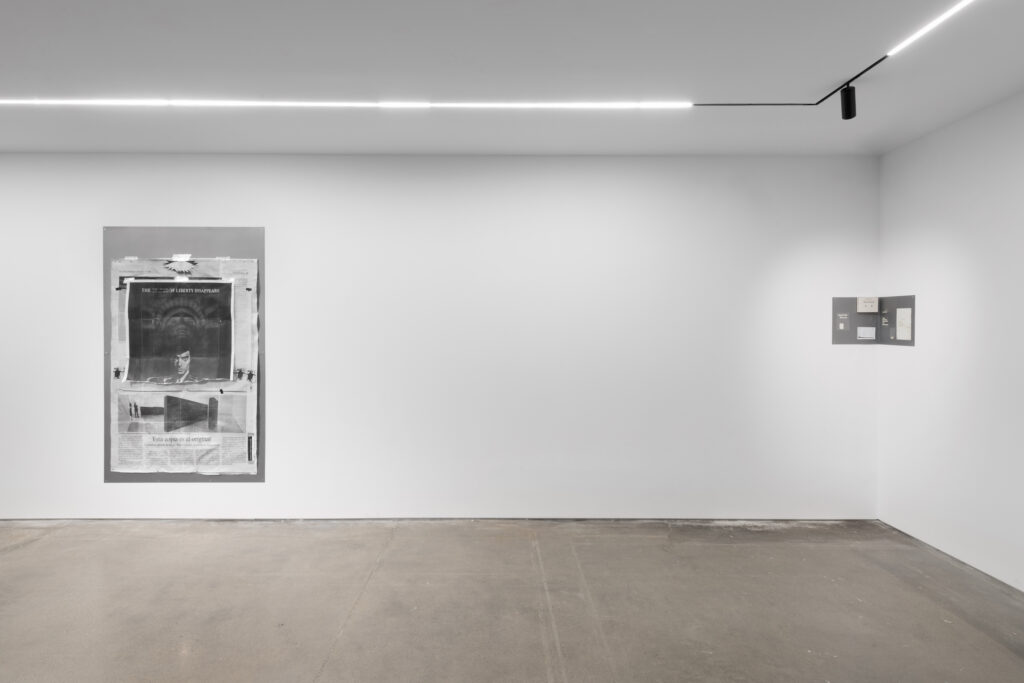
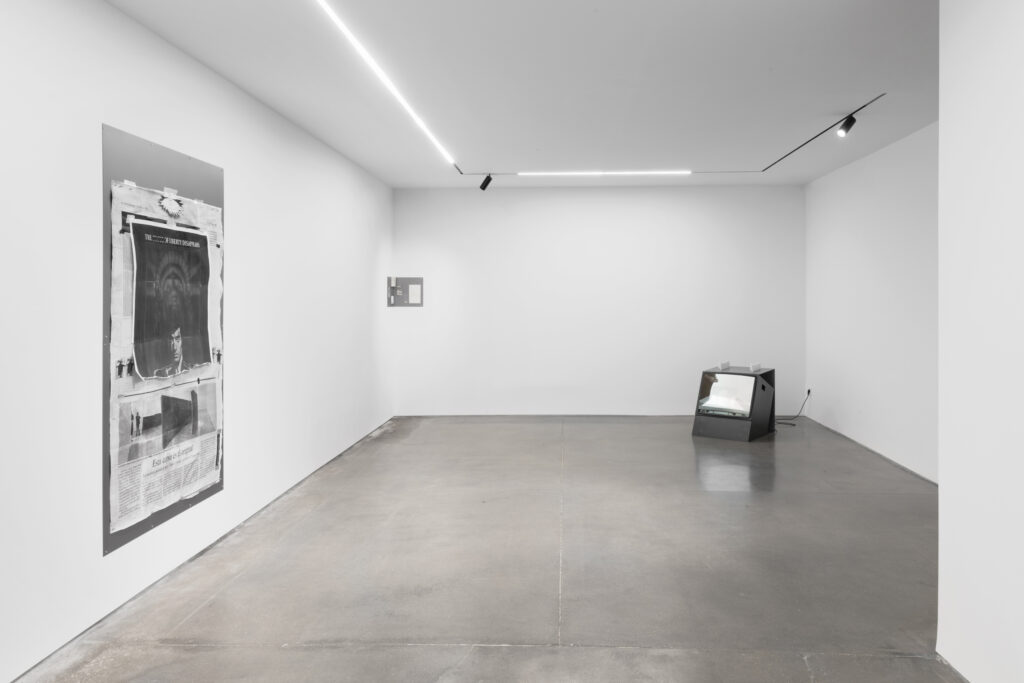
LIBERTY / COPIA, 2026
inkjet print on paper, glue, tapes, glassine paper, stickers, oil stick and pencil, steel, magnets
158.5 x 109 x 4 cm paper
190 x 120 x 4 cm with steel plate
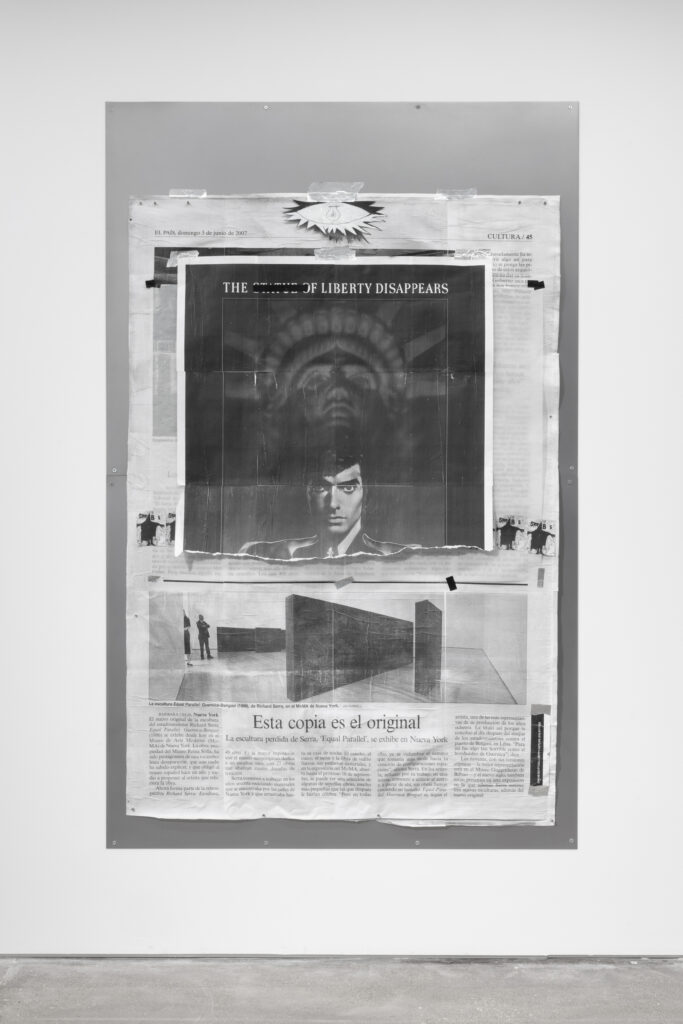
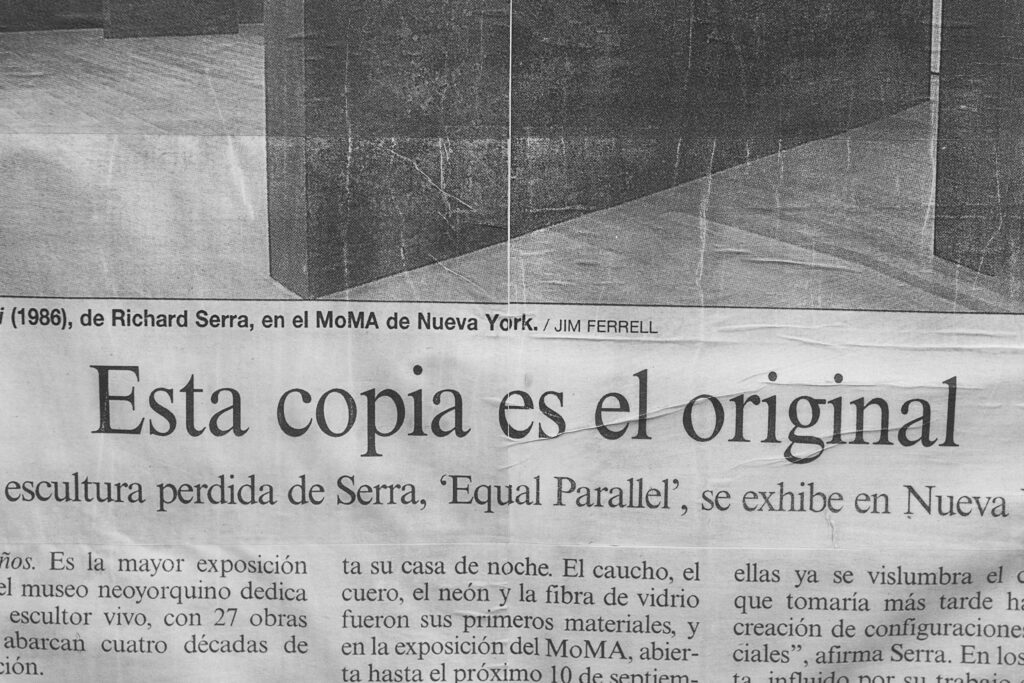
The first layer of this large collage work is an enlarged print of the June 3, 2007edition of El País. Visible in the lower portion is the headline “esta copia és el original” (“this copy is the original”). The article concerns the display of Richard Serra’s sculpture in New York for the artist’s retrospective at the MoMA, while also tracing the origins of the title, which references the bombing of the Libyan city of Benghazi. The connection between the American city and imperialist intervention informs the different superimpositions proposed by the work.
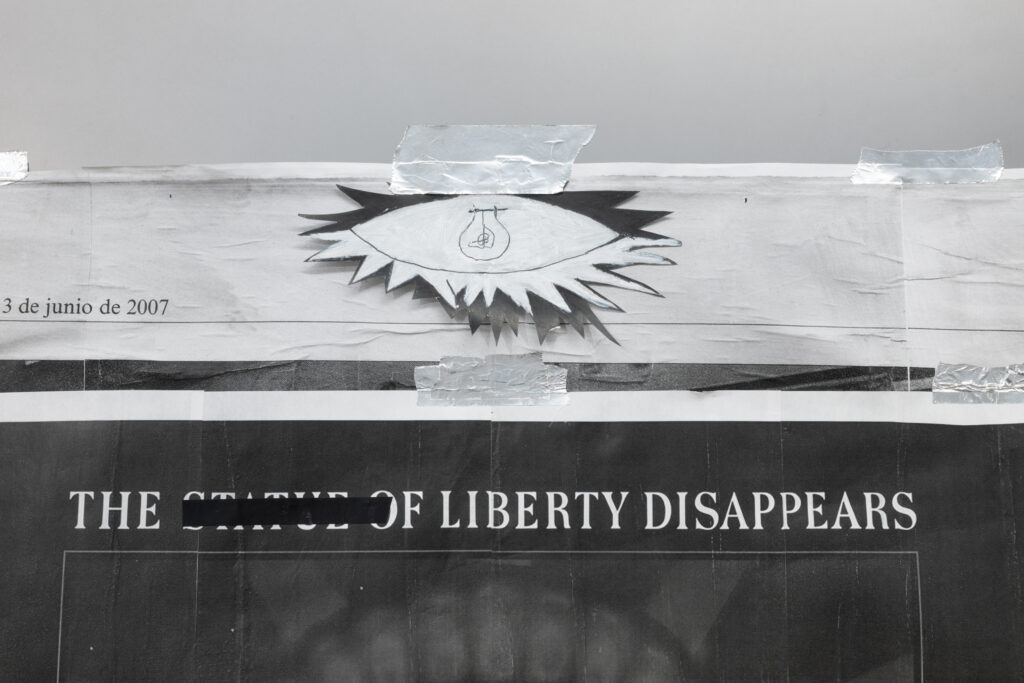
In the upper section of the composition, a fragment of a poster from David Copperfield’s 1983 disappearance of the Statue of Liberty is taped over the newspaper, foregrounding the phrase “The Statue of Liberty Disappears.” The gesture proposes a reflection of freedom in relation to imperialist strategies and political spectacle.
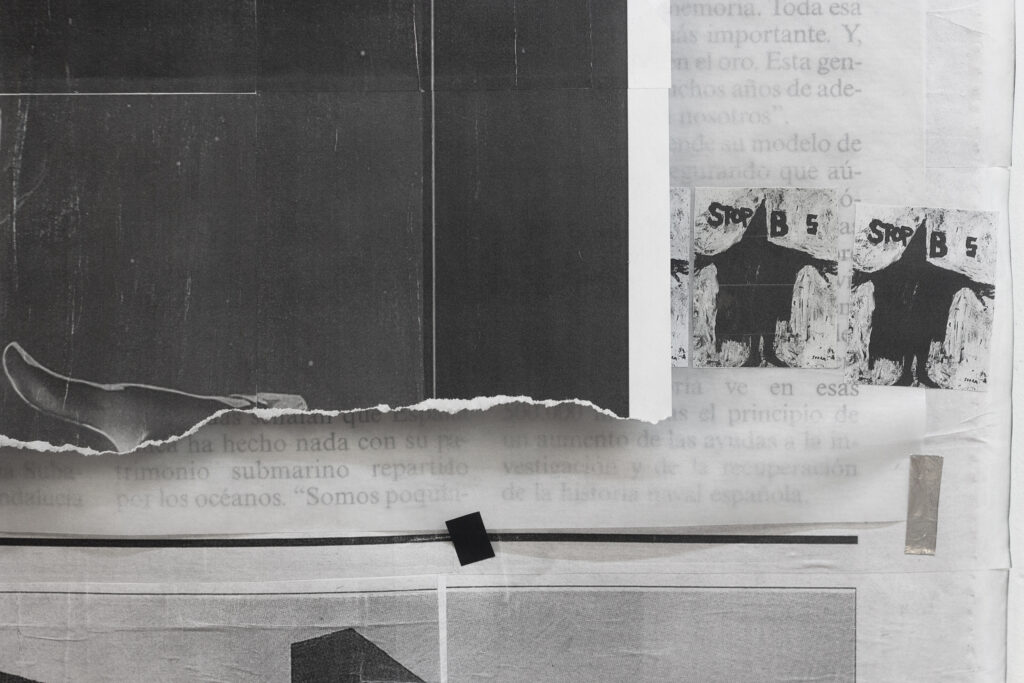
Beneath the poster appear several copies of a lithographic print produced by Richard Serra in 2004, one of the rare instances of the artist’s direct engagement with contemporary political events. Originally conceived as a benefit print for a Kerry–Edwards political action committee, the work exists in at least two versions: one spelling the full word “BUSH” and another abbreviated as “BS.” The print was later included in the 2006 Whitney Biennial. The work appropriates the now-iconic photograph of a tortured Iraqi prisoner from the Abu Ghraib prison scandal. One might wonder whether the political force of Serra’s image can remain intact as the original photograph gradually recedes from collective memory. At the same time, the work aligns with a much longer history of printed representations of wartime atrocities —from Goya onward —whose images continue to retain their disturbing force across time. In this collage, Serra’s original print is further transformed into a series of stickers.
At the top of the composition, the central eye/light from Picasso’s Guernica casts its gaze across the surface of the work, recalling the longstanding critique of Enlightenment rationality in relation to war, violence, and catastrophe.
this work is part of the exhibition to vanish